
The simple answer is that it’s a big moon that occurs closest to the autumnal equinox that’s bright enough to harvest under and that it also happens to coincide with the harvest season. It can also be called the corn moon, barley moon, etc. (obviously as an optimal time to harvest corn or barley).
Another term for people working two jobs is a “moonlighter”, meaning they work in the moon light at night.
And if you might not know, when the moon is bigger and full, it’s pretty darn bright outside compared to the other nights where the moon isn’t big and isn’t full. So for people who operate under candlelight, the extra moonlight definitely helps to navigate under and save on candles and such of the olden times.
But if we peel the layers back -there might be more to it.
Video games
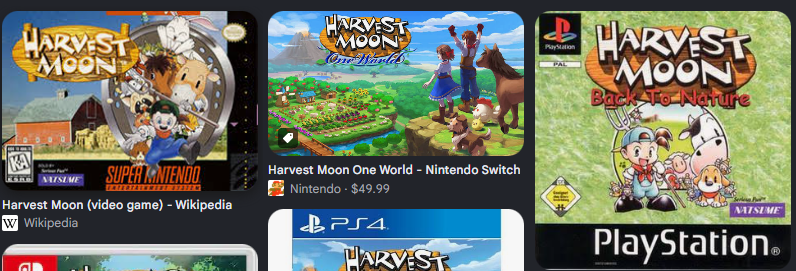
You know how in video games, there might be some items you loot or gather called Moon herbs or lunar flowers or moonwort or something? Knowingly or unknowingly by the game developers they’re pushing out a carried tradition of nomenclature from the times of harvesting under a moon (to be frank, a lot of linguistic things are passed on in the collective subconscious through cultural references, like video games and other pop culture).
A moon herb, then, is just an herb harvested under a moon. -or ‘Moonwort’ is just mugwort or other worts harvested under the moonlight.

A plant that glows at night
Much like how ‘moon water’ is just water sitting out “harnessing” the energy of the moonlight.
In druidic, shamanistic, and other esoteric traditions, there’s a degree of significance in the celestial bodies and the imparted energies into things like plants and herbs depending on when you harvest them.
In modern botany, we can cross reference the impacts of seasonal rhythm, lifecycles, stomatal regulation, circadian rhythm, temperature/thermal acclimation, secondary metabolism, photoperiodism, and chronobiology (worth also noting Ultradian and Infradian rhythms).
(see also Nyctinasty and Nocturnal anthesis)
In simple terms, when it’s hot out plants move nutrients from the leaves and stems to the roots to retain them better. When the sun is out, it’s typically/generally hot. When it’s daytime, it’s typically/generally hot depending on geolocation and weather.
When it’s cold, typically plants move nutrients and other jazz into the leaves and stems (hence why it’s believed in traditions of old that herbs are strongest or more potent picked under the moonlight, since the nutrients and properties are more concentrated in the leaves and stems).
When it’s really cold like in the deep winter, the plants store nutrients typically in roots and crowns or specialized storage areas. There’s a sort of golden sweat spot temperature depending on the particular plant for nutrient storage. When I say particular, I mean like how no two humans are the same, similarly no two plants are the same. Just like humans, each plant has their circumstances, age, and other factors.
Plants also regulate the pores they have on their leaves and stems (stomatal regulation) to regulate exchanges between the air, water, and nutrients.
Photoperiodism is how light (photons) affects the plants depending on the length of light and such. Which means a moonless night is going to affect a plant differently from a full moon night, likewise a cloudy day is different from a full summer with much daylight.
There’s also the idea that life, plants, animals, etc. become more robust after experiencing, surviving, and adapting to traumatic events. Like a tree surviving a drought or tornado might adapt to survive further ones through stresswood formation, rebound effect, and other mechanisms. I’m sure there’ probably an analog that is applicable to herbs as well.
As well as the maturity or age or specific time in the life cycle of the plant affects the potency of the herbs as well. For instance picking an unripen apple vice a ripe apple is different as well as picking the first harvest of the apple tree vice the seventh, surely that applies to flowered and non flowered herbs and the various stages of it’s life. It sort of gives more mystique to the fabled 1,000 year old ginseng stories.
There’s probably more botany and scientific terms to go into the inter and intracellular exchanges within a plant during these different periods as well as other factors such as pheromones and interspecies interaction or mechanical agitation. I’m not a botanist, but that’s probably worth pointing out.
Also worth pointing out artificial genetic manipulation or genetic selection and Horticulture practices (as well as the lack of) affect the end result as well.
Worth noting that geolocation and proximity to the moon and sun and celestial bodies probably have a non-zero impact on said potency. Mountain herbs hit different than river herbs, and proximity to the equator probably affects things as well.
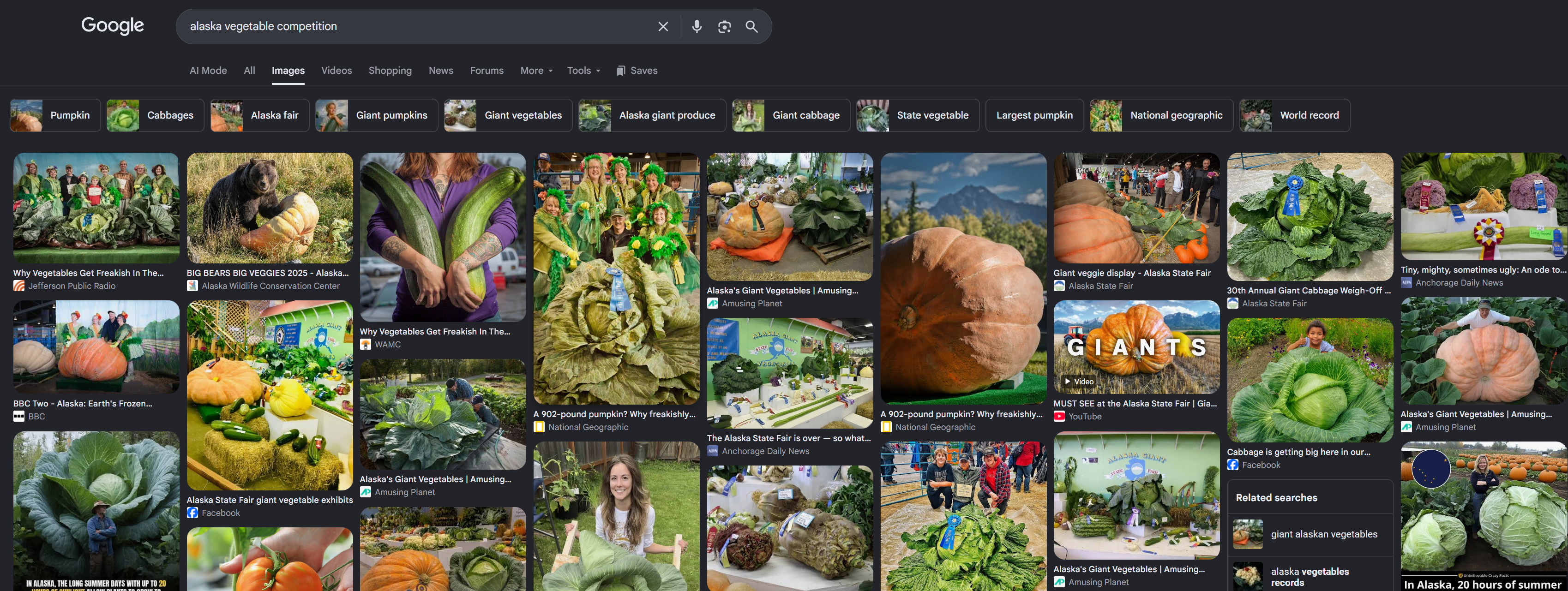
(idk if you’ve seen Alaskan vegetable competitions, but they get a lot of sunlight).
Worth also noting the nutrient exchange between the herb and the soil or other life around it. You know, birds and bees tend to affect things as well as what nutrients are readily available or what other plants or flora are competing, parasitism relationships, or collaborating a mutualism for growth (fungi is worth noting as well). There’s a lot of chemical signals in pheromones and terpenes worth noting.
And also worth noting that artificial grow lights can be tuned in to mimic various different types of sun or starlight that affect the end result to result in more potency, it’s just a bit of a mess trying to understand the exact tradeoffs in using artificial sun and moon light vice a real one since there’s a lot of chemical analogs in plants (to include Terpenes, Terpenoids, Phenolics, flavonoids, etc.)
As a side tangent, lots of the major marijuana industries hyper focus building near weapons-grade THC herbs in “lab-grows” that might forgo other complementary or synergistic cannabinoid chemicals like CBD or CBG and there’s a lot of other compounds as well. There’s a difference between knowing it exists, identifying the chemical compound, and understanding what it does (higher-order synergy or multicomponent synergy, as well as antagonized inhibitors or catalytic reactions), and that’s a bit of an unchartered territory that the industry is still exploring.
But hey, I’d also like to point out I’m not a biochemist.
Thusly
The day and night time affects the potency of herbs, as well as seasons, temperature and more. It’s all interconnected since the sun is hotter typically in the summer than it is in the winter, and temperature and sunlight affects the plants. So the day and night cycle is also at play.
You know how Humans under go homeostasis to maintain a balance throughout the seasons and the day and nights? Plants do something similar, as well as any lifeform really. -And there’s a lot of factors that affect things through life and the environment. -As a side note, You can talk to any first responder about their anecdotal experiences of a full moon fever and how that goes about, perhaps superstition, or perhaps pattern recognized regular stition.
A Harvest moon isn’t just simply an ideal time to harvest because it’s a big moon that offers light, but there’s more to the moon light than what you might initially think. Turns out we’re in this unified verse called the universe and it just so happens that a lot of things are happening and are interconnected in a spider web of relations.
If you venture more deeper into the esoteric lens, you might even note the seven planetary weekdays and other celestial cartography or astrology to coincide with your harvests. You could arguably go down to the hour or a particular zodiac year depending on how meticulous you want to be (or if you’re really in the esoteric sauce, how meticulous you ‘need’ to be).
In another lens, each plant is unique and peculiar, so it might not accurate to apply a blanket map for all things which goes contrary to other maps and such.
Epilogue
The lessons you might pick up from this article is that leaves and stems are potent under moonlight, and the roots are more potent during the hot daylight if you were to harvest herbs or tubers or something. It depends on what you’re looking for, sometimes if you’re harvesting a herb for whatever reason, you might want something less potent so you might want to pick the parts during a non-potent time and season.
There’s a lot of factors that go into potency, and I doubt we have an exact map that reflects the territory, but anyone is welcomed to reference other maps, or make their own. Map is not the territory type jazz, the references can help but aren’t reality itself.
That’s a decent lesson, and you might also pick up that there’s a cross-disciplinary framework or lens to view reality as the territory using different maps that coincide whether it’s science or esotericism, neither paint the full territory, because the map itself is not the territory. (But the maps are still useful).
Again, I’m not a botanist nor a druid or a nature spirit so take all of this with a grain of salt and use your own meaningful map.
And uh, the typical thing or lesson I should mention and repeat:
Words Mean Things
EXTRA
Gardening tips because you might be in the green thumb business.
Trees and plants need water proportional to heat and light. If it’s shady, you can save on water. If you’re growing in the desert, it’s much easier using mesh tarps over your trees or plants to retain both a little moisture humidity proportional to your set up and save on water costs by reducing heat from direct sunlight. Water is a way to mitigate heat among other things, you can look at a similar adjacent case of Atacama Desert reforestation project in northern Chile for more info. They used Fog water to help reduce irrigation needs, but basically mimicking the environment for rain forests for budding plants helps to grow budding plants, so you don’t need the large live canopies, just something functional to work as if it were live canopies.
All plants are different, and all plants at different stages of their lives are different, so try to calibrate for that as you go. Typically the full desert sun for a new seedling isn’t the best thing for most plants and trees unless it’s like a desert dry shrub, but even then for full on sun exposure, it greatly helps to have a resource of water to help offset the temperature and heat. There’s a rare few plants that thrive on full sun with little water as a sprout, so you’ll have to calibrate on a case by case basis and go with the wabi-sabi flow (also look into wabi-sabi gardening).
Most people espouse it’s a gardening myth to put rocks inside your planter for drainage because it causes a soil water table to form or a ‘perched water table’, the solution is to do that, use less water. I’m lazy, and so using rocks or pebbles means your potters will retain more water from what you put in and you can also ecologically use less water, it’s an all around win. I also prefer bottom watering potted plants, and there’s some more jazz about pots and breathable water clay pots for things like temperature control and air-conditioning, just have to be careful about glazing. The issue with root rot is overwatering and stagnant water, but if you can properly manage and gauge things it’ll go smoother. Again, it depends on the plants, the pot, the rocks, the depth of soil, the water, the temperature, and as mentioned above, quite literally the sun and moon.
So you find what works for you and stick with it, feel free to share. Anything that helps make my way of life lazier is golden.
I could go on and on about trees and nature, but that’s like a topic for another day, this is all extra jazz.


Leave a Reply