George Carlin, a comedian and thinker/philosopher had posed the idea of the word 'indian' to mean more than the Indus region or being hailed from the naming conventions of Columbus; "... Indian -That word probably does not derive from Columbia (Christopher Columbus) believing he had reached India in 1492. India was called Hindustan. More likely... Continue Reading →
The communication lesson of Pictionary

Getting a group of people together to draw pictures and guess what you're drawing, without directly resorting to words is a form of symbol and sign recognition. Drawing Charades or Pictionary is something that people can play to guess what the object is, to apply a meaning to a drawing, which is how signs and... Continue Reading →
The fix ‘Bene-‘
'Bene' in English is borrowed from Italian which means 'good' or 'well' and stems from it's Latin Roots. You can see this fix be used as a prefix for words such as;BenedictBenefitBenedictionBenevolentBenefactorBeneficentBeneficiary As a side note, Benedict has the suffix '-dict' which is related to diction or dictionary or dictator meaning "to decide or choose... Continue Reading →
Framing and Reframing, Structuring our reality with words
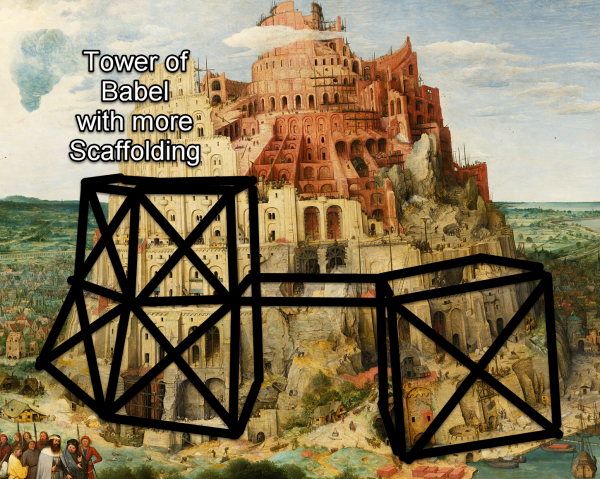
The Following is an excerpt from my previous writing about The Death of an Author x Poe’s Law. I wanted to roll into this excerpt and expand on it, to discuss the idea of framing and reframes, with how we can shape our perspectives and change the 'lens' or 'looking glass' that we perceive things in/through.... Continue Reading →
The Death of an Author x Poe’s Law

I am simply writing a journaling effort of comparison between Poe's Law and Death of an Author by Roland Barthes. Both of these thoughts or theories are based on the idea of knowing the Author's intent. We have one end, saying that if We don't know the intent of the writer, that it's going to... Continue Reading →
On the suffix -Nesia
The word 'nesia' comes from Ancient Hellenic (Greek) meaning 'island'. These words below are found to have 'nesia'; Polynesia = Poly for 'many' + Nesia 'island' = Many islandsMicronesia = Micro for 'small' + Nesia = Small islandsIndonesia = Indo (loosely translated) for the 'Indus region' + Nesia = Indus region islands The suffix '-Nesia'... Continue Reading →
AI is filtering Human Speech and controlling it

There has been a rising use of AI and large language learning models to produce, generate, and examine text. With the rise of such a technology, we've seen dubious use for both the production of words and as well as the judgement of vetting of words to spot AI generated works. AI to fight AI... Continue Reading →
Stan-land-Sthana
Afghanistan and Pakistan are the land of the Afghani or land of the Paki. Stan means Land. So Disney Land could be translated to Disneystan, which is a common joke amongst Americans that have 'toured' the middle east. "To stan" sounds like similar to Stand on, to be over in a sense. To reside from... Continue Reading →
Nawat Common Tongue, Bridge Language
The Natives and the indigenous people of America spoke a common tongue called Nawat. It's estimated that the natives came to Americas around 10,000 or so years ago and planted the forest and trees and did control burns as well as land management to grow the bountiful land that exists. The stories of many native... Continue Reading →
 Words Mean Things