
A categorical thinker is someone who uses broad generalizations and categories to understand the world. In a simple sense, we put things into boxes with labels. We categorize them. What is ‘good’ what is ‘bad’ what ‘is’ and what ‘isn’t’. It’s a short assumption we internalize or generalization into a cookie cutter label of ‘true’ or ‘false’.
Human beings are naturally categorical thinkers, where we assign an intangible value for an object or idea and store it within our memories based on association. That association is the ‘word’, whether spoken or written. So we put things in categories based on abstraction.
The argument could be made that all words are hypernyms. Simply that all words create an intangible ‘box’ that defines that which is within this category, and exclude that which does not belong in this category.

Categorical thinking is Humanity’s way of putting ‘like-objects’ in related ‘boxes’. We use fuzzy-logic to stretch out imagination for what will fit in our category. Much like a child trying to jam a cube into a triangle hole of a shape-sorting-cube-toy.
Labels are then, mere generalizations for the categories that we assign things, a simplistic view of the world in a black-and-white fashion for our comfort. It helps us compartmentalize the large complexity and sophistication of the objective reality. To help us navigate or make sense of things and connect dots to gain new insights or parallel lines of inquiry.
A compartmentalized abstraction of ideas are contained within these ‘categories’
example; Art
So, what is and isn’t [Category] ?
i.e. art? – What is ‘art’?
Who determines what is art? When you see a flower bloom, is it art? What if you see it in a video? Is it art when it is commodified and put in a textual sense to be replicated? Is Art still art if it’s on a shirt? Who decides this?
But more importantly, what do you think?
For some people, they may hear a story but not think of it as art, but some stories are impactful that they call it a work of art. Is art a quality that you can add or subtract to a thing?
Is a piece of art that is in the progress of being made, art? Is it art only when it’s finished? Who determines if it’s ‘finished’, if it the original artist or the last person to edit and modify or remix it? If someone remixes a song or adds paint to a sculpture, is it more art? or less?
There are a lot of modern art and even post modern art that some (or most) people won’t appreciate as ‘beauty’ or might be too ‘abstract’ or ‘minimalist’ to define as art in their tastes. Heck, there are even cleaning services that trash art installations thinking that it was trash and not art- this has happened more than once.
The philosophy of art and what it means to be an artist is often something that artists dwell on. Whether they feel like they have to overcome or be beaten by such a definition. That’s the journey of the artist.
As we navigate our world, we put things into boxes. It is or isn’t that thing. It is or isn’t defined by or under that ‘word’.
Things in law
We humans must recognize beings as being sentient under some stringent category and only then could we protect them with the current judicial systems. This is a simple way of looking at how law works, the law defines terms using words and then the law uses more words to categorize crimes as ‘innocent’ or ‘guilty’ and then define the punishment.
To create a human law of inclusion to protect sentient beings and afford rights to the degree that we can protect our ‘in group’ or ‘tribe’ or ‘our own’. As such, we may afford more rights to citizens than non-citizens, and further we may afford more rights to a specific ‘class’ of people, whether it’s by wealth or skin color. Do our laws reflect our personal perception of who can be a ‘human’ and what is determined as a ‘slave’ or even ‘prison labor’?
Another question is, how much do we provide in laws to favor or protect non-humans? This includes animals and nature and Artificial intelligence.
Putting words into categories
Let us turn inward to use words to define words, to use words and put those words into categories.
Words spoken, heard, and seen are Pavlovianly conditioned to us. We hear something that sounds like a similar word, and our brain quantum linguistically produces the meaning and images that we have categorically filed with that word.
If I say “post office”, barring those with aphantasia, can you think of three or so images that match the word? This can easily be seen when we have to select categorical boxes in an image captcha;
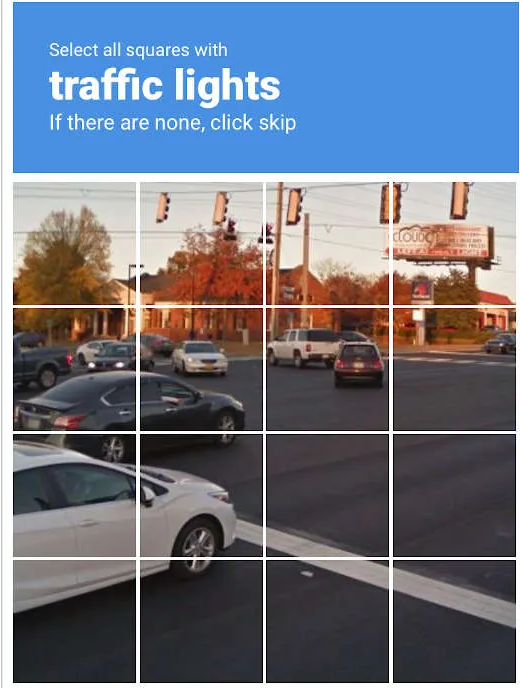
When we imagine a supermarket, one might imagine produce, cash registers, shopping carts.
When we imagine shopping carts, we might imagine wheels, metal or plastic frames, a handle, some resemblance of a parking lot or store for setting.
As a side note, if you want to ‘read minds’ and causality, you could use the most likely and probable categorical answers to predict what someone thinks. You won’t always be right, but this skill is something that you can fine tune to be scarily accurate.
We humans also apply this style of thinking for words and ideas as they relate to other words and ideas-, such as synonyms and antonyms, or similes and metaphors. A sort of comparison between words, for what is ‘close enough’ to fit the same category.
Synonyms borrow from similar ‘meanings’. Something that is cold is as ‘cold as ice’, to borrow the meaning of another word and applying it to a synonym of the same category. It’s poetic in language as well as relatable to convey the idea of ‘meaning’ when we phrase things a specific way.
Names are a more unique or peculiar label for particular things. From people, to concepts, and things. Whether the things belong in the category or not. Whether things are the word or not.
If you have a friend named Steve, that person is in a categorical box in your mind for what is a ‘Steve’ and what isn’t a ‘Steve’. If your friend John says they are ‘Steve’, do you accept that? If they dress up and masked up as Steve as a joke or prank, would you think it’s Steve on first glance? At what point does the boundary of identities and categories in your mind blur between individual persons?
When raised with a question that is borderline in the category or not, it raises confusion. Confusions lead to debates which leads to splitting hairs to define if something is or isn’t. I ask you to be comfortable with answering ‘maybe’ instead of jumping to an immediate ‘yes’ or ‘no’, to let the chaos and entropy of the undefined and unanswered questions sit and be enough sometimes. Providing room for truth to breath.
And of course, you can always change your mind and rewrite what you believe is true or false or uncertain.
The Category of Tribes
Tribalism and racism go hand in hand, when we’re defining eachother and putting eachother in different boxes. In categories. Perhaps we even take sides on a tribe or race to antagonize other tribes or races.
Take for instance, half-white and half-black children, I have known people of the white and black communities that don’t see these children as white or black respectively. They say that these kids are not white enough or not black enough, they categorically think and check a box to define another human being based on the category of ‘race’.
‘White’ people, may assign these children as black and treat them less in a racist environment, as an outsider or ‘other’. ‘Black’ people may assign the children as white and treat them as they have self-entitled privilege for being partly white. What does it mean to you for a person to a ‘white’ or ‘black’, is your definition of these terms the same as everyone else? Is your label or categorical classification the same as everyone else?
We put people in boxes based on their looks and their actions. If someone ‘looks’ wealthy, we may think of them in a certain light and likewise if they ‘look’ unwealthy. If someone lies, cheats, or steal, then we may consider them in a ‘box’ to help remind ourselves of what kind of person they are -outside of the idea of their ability to change or even our ability to change our own mind about them.
The general populace wants to assign a label to know whether people are friend or foe in society, without knowing where to go. Often times many people may feel anger and frustration, then they direct their hatred towards an identity while perpetuating tribalism themselves. We box our world with categories and words to make sense of it all as if we’re navigating a very unknown and vast reality.
We may not find ourselves to have the time or energy or capacity to provide an individualistic approach for everyone. We might be stressed out and want to assign a box, an identity, on a group of people that sort of categorically fit to make our lives more ‘efficient’ or for our own ‘piece of mind’.
I am not saying that this is right or wrong, I’m saying that everyone is doing it, whether they know it or not.
Our world is a category
Our world and our reality is made up of signs and symbols, we put things into boxes, framed often as ‘words’.
This is red, this isn’t red.
This is black. This is white. This is grey.
This is True. This is False. This might be True or it might be False -it is uncertain.
We use all sorts of ‘hypernyms’ to construct our own ‘hyperreality’.
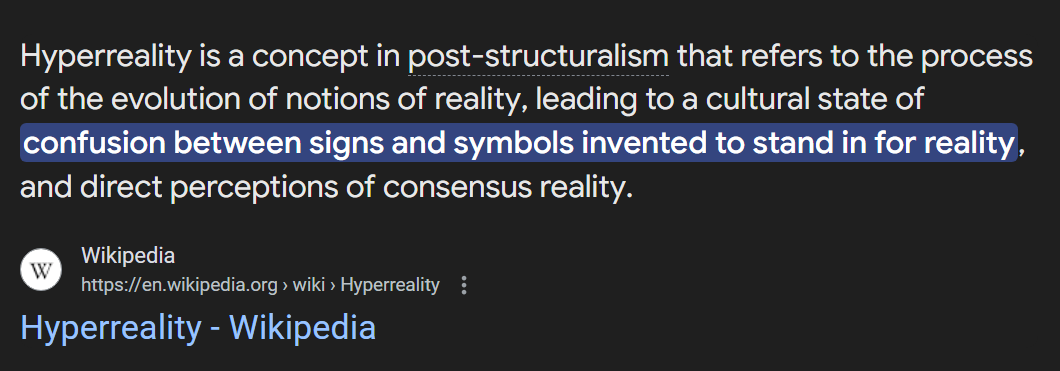
Our own reality is essentially our own little pocket dictionary as we read and define things and objects to signs and symbols, for what is and isn’t a category, for what is and isn’t the ‘word’.
To go further out, we also create belief systems using words. We create a meta-hypernym, using a sentence to construct a belief to then fit in the category as a lens to see the world. “Red cars cost more insurance”, “Lions roar”, “X political party are evil”.
Often times, if you question some of your beliefs, assumptions, your presupposed beliefs (or presuppositions), you’ll find that reality is less defined than you think. That you live in an age of information and misinformation (which, both are categories), each belief and ideology trying to hijack your mind under the guise of living a better life or some other desirable reason. That reason is often the justification, the anchor, the attachment to your belief.
The Filing cabinet – a mental frame technique
One person once described to me that their mind palace or mind garden was a large filing cabinet. That they place thing in labels and filed them away in different infinitely long drawers. That they could open the cabinet and find a file with their knowledge and relations to that subject matter.
It’s an interesting way to look at it, if you wanted to embrace more categorical thinking from a mental perspective. I would suggest also taking some of those files, connecting the dots and integrating them and making a sort of tab or reference to access the files easier.
Perhaps making our filing system more like a computer system with notes where we file big ideas and things. Something with access, but all in one file.
Technically (and superficially) speaking, AI Large Language models use matrices and datasets in this way to cross reference and generate patterns to output a result. Is our mind, a large computer, that does the same thing?
As a side note; for societal change
If you see in our society, a lot of people look for value as value, rather than valuing things beyond price. They want cheap goods and fast fashion. We have surrounded ourselves with things we endorse and wanted, and it’s our punishment to regret it later for our ‘instant return’ or ‘instant gratifications’.
“Insert Industrial revolutions and it’s consequences joke” ha.
If you live a life of convenience then from a result-or-pragmatic perspective; convenience is what you seek. Society as such seeks similar things based on the collective desires of the individual persons. Thus, if we were to value different words or categories as our ‘chief aim’, we could shape our reality.
So if you want more beauty, truth, and love, seek it.
Your choices and actions are a radical vote for how the world can be.
Epilogue
Just remember, things are more than the categories that we put them in, even ourselves. We are more than just labels.
“I live on Earth at present, and I don’t know what I am. I know that I am not a category. I am not a thing — a noun. I seem to be a verb, an evolutionary process – an integral function of the universe.”
-Buckminster Fuller
We are human beings, and as a being, the goal is to be. So please don’t simply put your worth or others down for what they ‘do’ or have ‘done’, and consider forgiveness and some degree of reconciliation. Being, is an evolutionary process.
Words are just labels for things and categories.
And all of this is reiterated into a boxed category, a sentence, a phrase, when I say that;
Words Mean Things
 Words Mean Things
Leave a comment