
In philosophical terms, in order for ourselves to be an individual, we have to identify what is the ‘self’ as well as the ‘other’ and make distinctions in identity for what is and isn’t a ‘thing’.
This is the base of identity, and there are many different debates and thoughts about this from identity, ego, soul, Theseus ship, etc. The relevant part is that this can be seen in words.
Words are a unique arrangement of letters that try to box a ‘meaning’ giving the phrases and meaning a sort of identity within a broader sentence or broader meaning.
If I use the word ‘car’ but I mean to talk about ‘space ships’ or if I say the word ‘black’ when I mean the color ‘red’, our identification with definitions would create miscommunication and misinterpret our meanings.
This may seem like semantics, but how we identify the world around us is a prescriptionist label. If I identify myself as god emperor king, would you identify me as the same and submit to my radical crazy ideas for having free ice creams on Tuesdays? Titles and names and authority rely on the connections with words and the underlying social contracts as well.
If someone says they are the police, then I have to question their authority to some degree and as they prove that, then they are granted certain privileges to perform some capacity of law or practice. Likewise the identity of a title in a Doctor for medicine or a specific title for a profession grants a degree of form or formality. It puts people in the forma and we associate them with some degree of our meaning making or thinking.
Identity debate itself is philosophical, and the application is political (political identity) as well as reality navigating (categorical thinking).
Even the identity for drugs and food are important and regulated in the markets of the US. As well as financial derivatives and laws. The legal system uses specific definitions to properly identify things and proceedings as well as people brought forth on charges.
So in language, Identity plays a roll in the words we use, and their meanings.
Language is an approximation
When we use words, we try to define and package our meaning into words, give it like a gift box to someone else, and let them unpackage and try to assemble it based on instructions written in their native tongue or idiolect.
One of the goals of language is to communicate an understanding that steelman’s our position for the other person to understand us (whether it’s an opinion or a request). We are using language as a tool to communicate ideas and values to each other in order to achieve all sorts of things.
As such, Language and the words we use are;
1. an approximation for reality and how we identify it,
2. based on the perspective that we speak from.
If I talk about a “red car”, you have an idea for what the color red and the idea of a car is (assuming you know those words and what they mean). If I add more specifics to my description, then it might no longer be simply a ‘red car’.
If the red car doesn’t have an engine, we might call it a ‘red car without an engine’, but if our perspective doesn’t reveal what’s under the hood then a ‘red car without an engine’ is just a ‘red car’ based on where we look (or what we can see). Arguably if a car can’t run then it’s not really a car because it can’t function like one, but because it’s a car that can’t run and it looks like a car, we can still call it a car. If we remove many parts of it, then it stops becoming a car at some undefined point. The further we change it and modify it, the less of it is identical to it’s old self or the identity of the idea of ‘car’.
So identity, among other criteria, have a sort of idea behind the identity. It has to function or act a certain way, and also look a certain way.
Plato posited the idea that there is an ideal object or thing for a word. For instance the word ‘table’ puts into your head (for those without aphantasia) a picture of a table, maybe it’s made of a specific material, specific number of legs and sizes. I’m not here to say that’s true or not, what I will say is that our definition for the identity of a word is matched with our envisionment or description of it. When we talk about things, we tend to have an idea either in mind or in perception.
As things change, as things become less and less closer to its’ original identity, then we use words as selective tools to grab the meaning of what we’re describing. We try to use the right tool for the right job, if we remove all of the car parts except a single wheel, we’d refer to it as a ‘wheel’ and ‘not a car’, because that’s what’s left and it closer resembles just a ‘wheel’.
Words are tools and we use the right tool to be as precise as we can to describe and communicate meaning based on the identity of the thing we are describing. Our degree of precision and resourcefulness with words is also called brevity or wit.
So our perspective is relational to our use of words and how we identify things.

Our perspective shapes the identity that we assign things. Identity is a sort of value and we can adjust it. Like how beauty or perfection is a value or ideal, our words capture an ‘ideal’ close approximation to the identity of the thing being defined.
If someone is trying to hurt me, I may identify them as an enemy. If someone is helping me, I may identify them as an ally. These labels are words and they are also identities that we box things in our universe or reality into to help conceptualize and make sense of things. It’s a generalization that gives us a degree of control over.
The word itself is not the identity for the thing being identified. The word water is a label and a word, but it isn’t something you can drink or wash yourself with. As such the idea of identity doesn’t apply
Identity and property rights
Not to get all John Locke on you, but how you call something or name something is also a part of the property rights and origins.
If you own a car, and someone steals your car, and it’s stolen again and again, and you see it a week later, you’d still say it’s “your car” and that you’re the rightful owner. The languaging frames an identity and ownership or authority over the object or subject.
In political settings, a nation’s name is a political thing. Whether you call it Constantinople or Turkey, Israel or Palestine, Rhodesia or Zimbabwe, Burma or Myanmar, etc. etc. The way you refer to the nation or country reveals your perspective politically, even if it’s not accurate to your true feelings or nuances. This is another important factor in ‘words mean things’.
If you go further into secular identity politics, the way we identify people is also indicative of our perspective. If we call people African American or Black or etc. then that’s indicative of a perspective, racist or otherwise. If we identify gender as being more than two genders or being only two genders, then that’s also affiliated with personal identity as well as the politics or social interactions of those around us. Race, Gender, Ethnic background, IQ scores, Titles, Achievements, College degrees, etc. There are many different ways to identify someone and we do so with our words.
Words are tells for how we see the world, because our language and words shape our reality. So the specific words we use are very particular and peculiar, and if you pay enough close attention with an expanded level of consciousness, you can practically read people as if they’re books and their words spoken are just lines of dialogue.
This is one of the cool things you can do when your truly grasp that Words Mean Things. It becomes unethical when you start penning in their future lines without their consent, so be wary of that.
Humanity – Human Identity
One of the most critical things in all of Human History is defining the word ‘Human’.
What is a Human, who counts as a human, and what rights are afforded to humans? What is a Super Human and what is considered subhuman? Prisoners or slaves? Ethnic backgrounds? People without two arms?
Because if humans aren’t equal, or if some humans are more equal then others, then society has created subconscious permissions to discriminate and eventually allows the creation of atrocities and genocides. This is clearly evident in past history as well as current geo-political events.
These questions of a life or a human are still are debated, whether it’s in the pro-life or pro-choice argument, or in the heat of war between combatants and assailants trying to positively identify who is a civilian and who is a combatant. The matter of identity for a human and from a friend or foe is life or death in some cases.
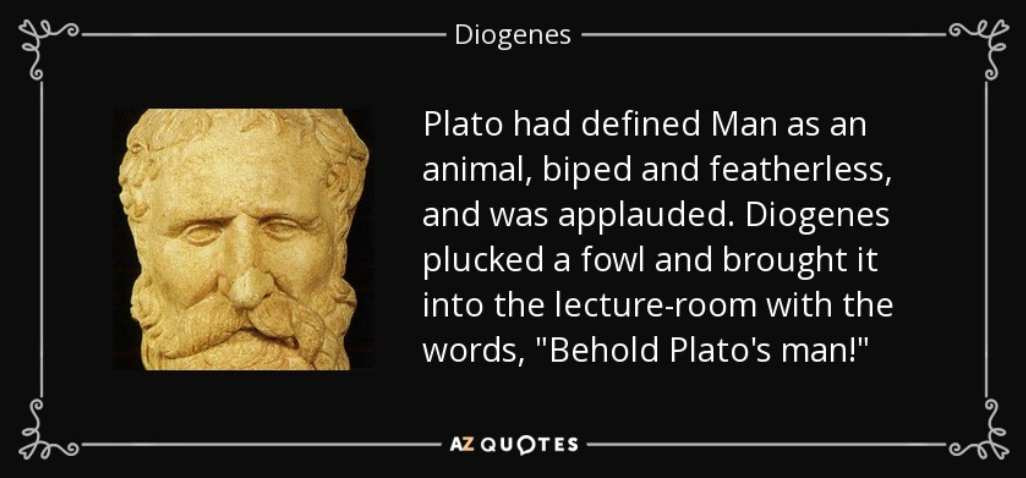
“Man is the measure of all things” – Protagoras
-and we try to define what constitutes a Man, a Human, a Woman, and other words. The legality and political ramifications of such are important. It may seem silly and pedantic, but the policies that are written from it can cost people their lives. The weight of the pen is indeed mightier.
In terms of the bible- Genesis 1 (KJV);
26 Then God said, “Let us make mankind in our image, in our likeness, so that they may rule over the fish in the sea and the birds in the sky, over the livestock and all the wild animals,[a] and over all the creatures that move along the ground.”
27 So God created mankind in his own image,
in the image of God he created them;
male and female he created them.
28 God blessed them and said to them, “Be fruitful and increase in number; fill the earth and subdue it. Rule over the fish in the sea and the birds in the sky and over every living creature that moves on the ground.”
Point being, the holy scriptures or your religious doctrines and texts outline what a ‘man’ is and allows the ‘man’ or ‘human’ to have ‘dominion’ as a sort of manifested destiny innate into the motivations and perspectives of the world. It is to note that mankind in this passage refers to humans and not specifically male. When someone has a strong religious foundation, they revert to the teachings of their specific religion to define terms and norms and even titles and powers and authority. There’s a reason why Kings wanted ‘god given’ rights to their crown, or when Japan in WW2 believed their emperor was a god themself.
This can also get a little rocky and scary when people believe that they are god themselves or god incarnate and that other beings are lesser or not god. This leads to all sorts of conflicts and maltreatment to include ethnic cleansing or genocide. Even calling people ‘monsters’, ‘slaves’, ‘bots’, or ‘NPCs’ are identity based language used to deride or dehumanize others.
The Identity of a Human as well as a Citizen and Nation (or tribes in general) are just words being defined, with dire consequences for those that aren’t included in the ‘cut’ of the definition.
This expands further out into the identity and definition of what is and isn’t ‘conscious’, and even the talks about if the ‘soul’ exists and who has or hasn’t one.
Epilogue
The philosophy of Identity is sort of silly but interesting and fun, and also has dire consequences in application. It’s just something to consider, but I think ultimately it’s a debate about classical logic and fuzzy logic under the scope of philosophy of language and philology. Seeing as the word ‘identity’ is a word and that we’re often trying to define it, I can argue (almost) all of philosophy is the philosophy of language or forms or formas. It’s just a matter of perspective, But I digress. . .
The point is, words are things that relate to our identity and our perspectives. If we pay attention to the words we use and the words other people use, we can get a glimpse at their identity and perspective. It shows us where we stand in relation to the reality, our maps give us a perspective to the territory from one viewpoint. If two people are looking at the same map but one is reading it upside down, we can have many arguments and misunderstanding, let alone if people are reading different parts of the map based on their own interpretation of the map’s legend.
If someone shares their identity (or their pronouns or job titles) and person A uses or don’t use them, then that’s also telling of person A’s disposition and stances. And the reaction to being accepted or not is also indicative of a person B’s disposition and stances. Mere words can make or break or appease or offend people on both sides of the discussion. This results in peace or conflict and is a dialogue and dialectic being had throughout humanity for better or worse.
A lot of things are said, but this article is about definitions and identity as it relates to words, and also the simple repeating message on how-
Words Mean Things
 Words Mean Things
Leave a comment