
I am simply writing a journaling effort of comparison between Poe’s Law and Death of an Author by Roland Barthes. Both of these thoughts or theories are based on the idea of knowing the Author’s intent.
We have one end, saying that if We don’t know the intent of the writer, that it’s going to be taken out of context. Turning satire into seriousness; Poe’s Law;

I do want to add, that the serious can be made funny, and the funny can be made serious, depending on many factors as well as knowing of the author and the author’s intent.
-And we have on the other end, saying that the writer or author doesn’t matter one bit, and that the work should be able to stand on it’s own without such inferences. Things like a person’s socio economic status, or gender, or identity, or class, or period of time, all shouldn’t matter to play into the seriousness of the work or demerit it’s value.

And as a person who deeply cares about words and their meanings, I say that both of these things matter. It’s not solely one or the other, but focusing on one or the other may change the meaning or message entirely. The person who is writing matters, and the work should be able to stand alone. Sometimes one thing matters more than the other.
It’s an aspect of Duality, it’s both, it’s one, and it’s quite possibly none. As tricky as a Daoist perspective or a gnostic sophistry would have it:
Does Author intent matter?
Maybe, maybe not.
In terms of History
It’s not clear who invented the mythologies for the Greek gods, but it’s clear that however they manifested (from stories told or perhaps direct experience) that the original intent is not able to be objectively confirmed. It’s not clear if they are real beings or if they are metaphors portraying either morals or archetypes. It’s not clear if they were actual gods worshipped, or if they were helper spirits or aides that would guide a steady hand. Without being able to directly experience, we have to rely on old texts to imagine if Dragons were real or if prophets were speaking in hyperbole.
Arguably, in thousands of years from now, if people forget history and revise it over and over, an Anthropologist or Historian trying to piece the culture of today’s time might mistaken things. For instance, they might look at our comic book culture and see Marvel or DC Universe of heroes and think that these heroes were the pantheons of our time, and maybe even the deities that we believed in. The idea that someone might uncover a funko pop and consider it a relic, while also saying that plastics used in everything was a ‘favored’ design choice and not a mass produces pathology- is quite entertaining. It’s also a non-zero chance of happening.

represented in a Funko Pop
And also in the ‘Marvel Pantheon’
will most definitely make it confusing for the future
Oh, we also have Zeus;
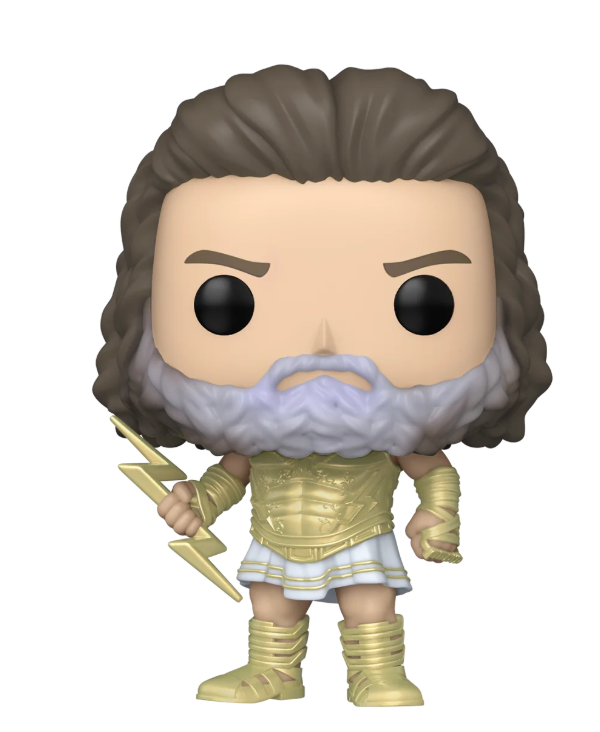
So, with -and throughout- time, history bends; and the intent of an author may be lost, allowing the audience to apply their own guesses to the intent.
In another take, another civilization might look at us humans and think we worship the machine god, by spending all of our time to be in front of screens, whether it be a phone or a computer. Human society keeps working hard to make energy and electricity to power machines that we use as tools, and that we laugh at and smile and be angry and sad, all in a few (now) simple devices. One could look at us and think that we are worshipping or building the machine god, in a collective consciousness form (arguably some fellow human philosophers already think that).
Arguably, if humanity is it’s own individual author, it would be hard for us to even know our own intent. Heck, what is the meaning of life, and how are we humans defining ourselves based on what our ‘perceived intent’ is? That’s a rather big question, so table that for later, for I have more words below for now.
In another way, we do this with history today, finding intent and meaning making. We find artefacts, scrolls, and works that give us a glimpse of what could be in the past. We have no way of confirming the true intent (without a time machine or something), so we make educated guesses based on a degree of work and uncovering discoveries. We try to ‘triangulate’ the meaning of things to give us an idea for how our human ancestors lived.
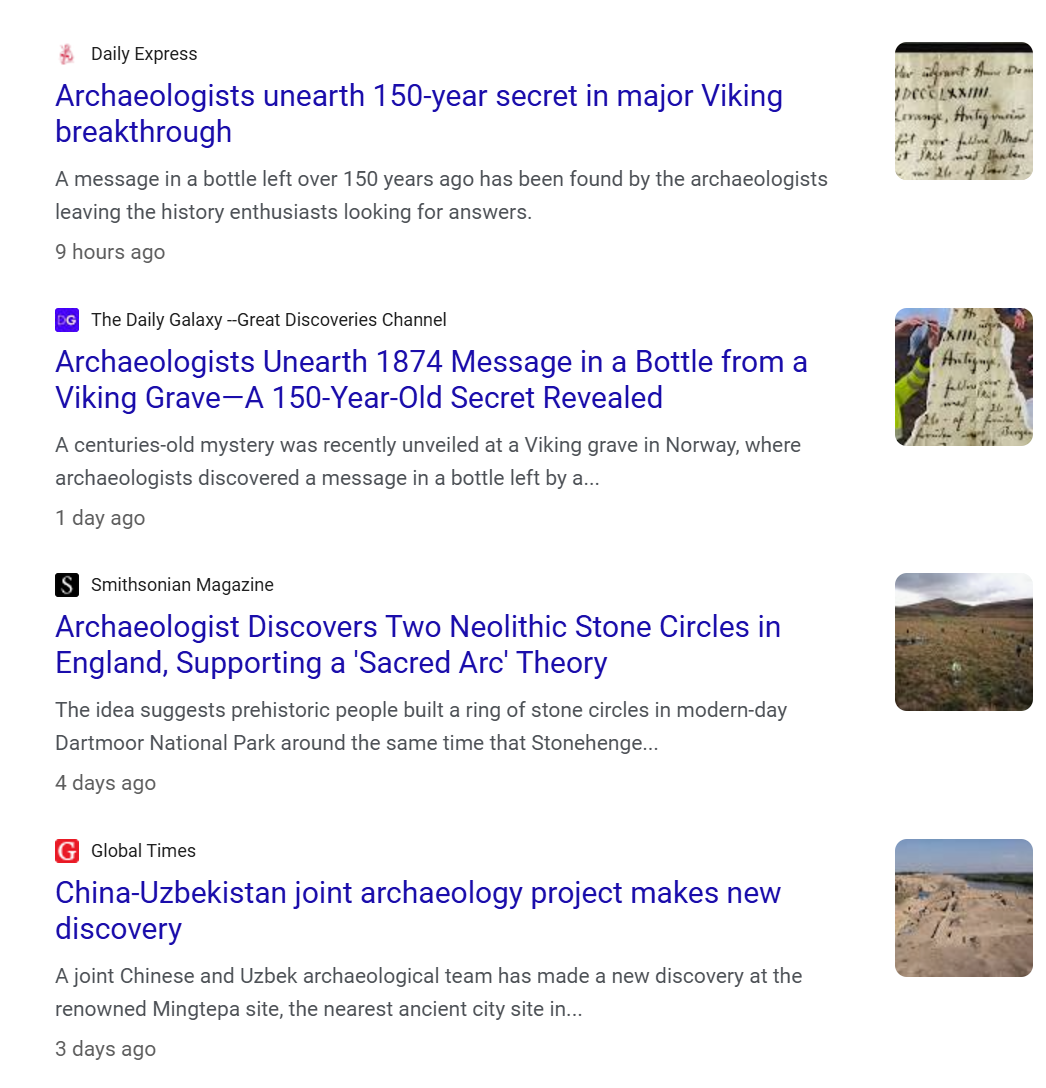
And we have many Tribunals or group of elders trying to decipher intent. The Supreme court justices in the United States try to find the authors’ intent for the constitution and the law. The circles of Religious papal or rabbinical or scholars or theologians that argue the intent of the holy texts. The science or magic that tries to unravel the intent of the universe. -and of course, all of the examples above.
Often times, how we think and do things is very similar to how they (other humans) would think and do things. The question is whether we have the right tools and teachings to think and do things the same way. For instance, there are adults in the first world that don’t know we can eat fruit directly from trees. While there are technologically exclusive people that don’t know what a TV is. We’re not so different, I’d like to think. But of course, all of that is a debate on nature vs. nurture and such.
In terms of Art
There is a focus of intent in post-modern and modernist art.
- Some artists prefer the art to be captionless and titleless, allowing the work to speak for themselves.
- Some artists make a shoddy piece of work and put or pour the entirety of their art into the caption.
- Some artists pour art into neither.
- And the old school traditional artists would pour their art into both-
- -or just the art itself.
The idea of Titles and captions could frame the ‘intent’ of an art piece. The framing of a piece as well as it’s juxtaposition to other pieces can give it a different angle. How a piece sits and frames against other pieces.
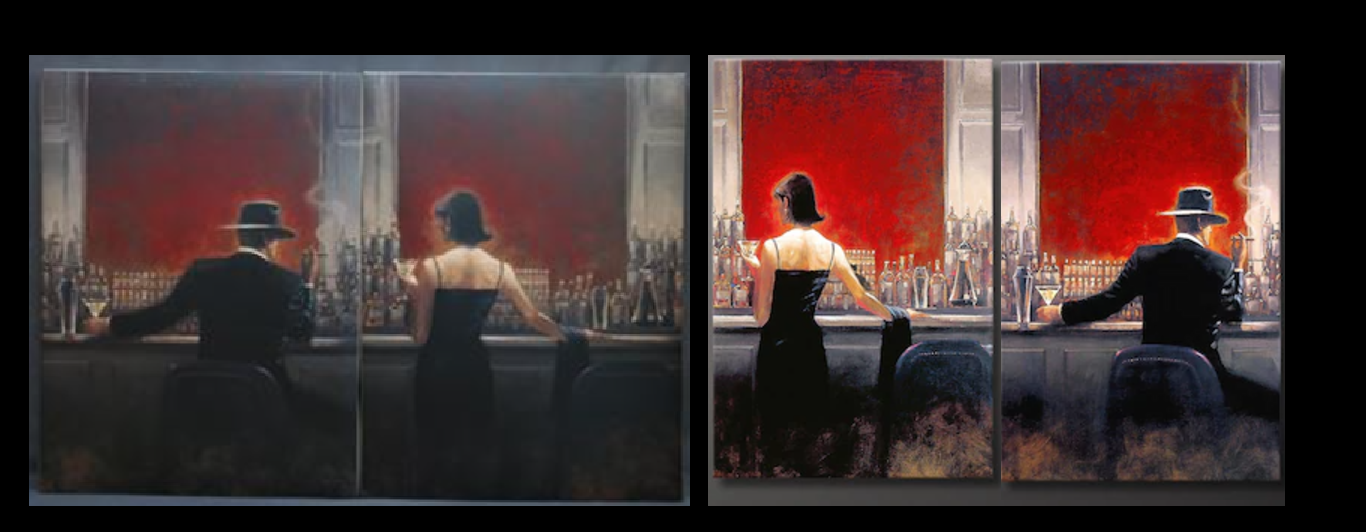
Are they together, apart, lovers, strangers, or something else?
For instance, if an art piece was small and buried behind many art pieces, with the art piece (of, say an old dog at an adoption center) being called something like “buried in the back and waiting to be noticed”, it would be framed as a way of self discovery for the viewer when they find and take notice of such a piece. The environment and the other art pieces would ‘frame’ the existence of the painting.
(feel free to make that art piece above come alive)
If a Title of a song sets the mood or feeling, then these words have a sort of introductory or framing effect. Even the lyrics within a song can give it enhanced meaning. Some people don’t know or are unaware of the lyrics of a song on their first few listens, and when they understand the song, it’ll mean something completely different after having been understood.
In this sense, when does the art start and end, does it include the framing within the art?
I discuss a lot about the framing, because it shows a sort of mirror reflection of the intention of the author. A Frame can be a simple frame, or it can be a signature itself and reveal something greater. -And that’s just one aspect of the work.
We often times try to find the string of words that paint the story behind a work or story. The Caption or even the ‘scoop’ behind the scenes into developing a movie or song. The meaning behind a story, and meaning can be viewed as intent (as well as effect or result or means). Intent is one facet of meaning, typically meaning the intention of one for doing something. That is meaning itself. But do the results matter more or is it means that make the method? Maybe, maybe both, maybe not.
In terms of Online Discourse
It seems whether on X, Reddit, Tumblr, Tiktok or more, the use of a maximum number of letters or characters greatly hinders expression of people who simply use more words. In the high speed environment of trying to out type everyone and hunt engagements or reactions, people try to say a myriad of things from a level headed idea to a bombastic satirical joke.
But if there is no way for someone to measure the satire, then it’s not clear if the satire is satire or if it’s intentional. If there’s no clear evidence of the author’s intent, then someone might think you’re joking when being serious, or take you serious when you’re joking.
This level of misunderstanding can induce a lot of conflict and arguments, which fosters an environment of combative wit and engagement, which feeds a cycle of hatred over and over again. A game of one-upmanship where people try to ‘win’ like digital gladiators for the digital applause of ‘likes’, ‘retweets’, and ‘upvotes’. Typically and broadly speaking of course. -And the social media algorithms in all of these might benefit from the quick sessions and engagement. Farming for content and remixing interactions.
Or in some platforms you can be banned or removed or downvoted by mob rule or the rule of the platform administrators or moderators. So, it’s interesting to say the least.
The statement stands that; without clarifying intent, in as few words as you can, you may not be able to speak freely or crack jokes without being misunderstood.
This also applies to news media and streamers that like to ‘clip’ out of context things to skew the intention of what is being said. Sort of ‘framing’ what someone else’s intent is by manipulating time to shorten or mash what someone else says.
So, for anyone writing online, it might be worth considering how someone could take your words the wrong way. Consider that they know your intent, or that they think your intent is the exact opposite of your current intent. What you say in support may be viewed as a critique, and vice-versa.
Some times people use a backslash letter s to identify sarcasm, and I’m sure there’s other codes and secrets in language that people use. (/s)
And all of this is especially true in conversations in text and the digital space, for we aren’t directly in front of a person so their mannerisms and behavior and ‘how’ they say things isn’t expressed. We can’t hear sarcasm easily through text. The Physiology is an important role or factor in communicating.
I would suggest, as a reader or listener, to look for multiple layers of meanings behind words. With such an insight, you may become a better author when you write or create your work with intent.
The meaning behind a word-
-Is influenced by many things. The Author. The time period. The Set and setting. The language. The metaphors. The way it’s pronounced. The text or even the font. There are plenty of things that factor into the meaning of a word.
For instance, the word ‘stupid’ is trivialized in current contemporary sense, but if we were to go back in time, the word ‘stupid’ would be akin to a grave insult. We have the ‘Euphemism treadmill’ for that, in which harsh words are replaced with harsher words and terms, allowing for the less harsh words to be more accepted into societal normal language.
So the idea of the subject and subjectivity of the saying, words, or art, or whatever. All of it is a dynamic play between the audience and the story teller. The Crowd and the Musician. The Lover and the Poet.
As they say, art is subjective, and beauty is in the eye of the beholder.
I would Dain to argue that intent is similar. It is intent within the author, as well as the intent (beauty) in the eye of the audience (the beholder). Both are powerful and both change the way we view things.
In terms of words
When you say things;
What do you mean by saying them?
When you write things;
What do you mean by writing them?
What is your intention?
IF you were to say ‘I believe in god’ or ‘I don’t believe in god’; What is your intent behind the word ‘believe’ and what is the intent behind the word ‘god’ and what is the intent behind the entire phrase? Are you saying it out loud for others to hear, or for yourself?
Hence, I argue that intent matters-
Yet, at the dualistic same time,
Your intent won’t be heard or acknowledge five thousand years from now, nor if it’s misunderstood or heard wrong. So you have to craft your piece carefully, to allow it to stand alone and try to limit the reliance of intention. Which is a tricky thing to do. The other option is to try to make your work in such a way that the possibility of your intention isn’t mistaken. Or perhaps you craft your piece so that the audience has the intent that you want, rather than the intent that you have? Maybe we say things for others to gain, rather than for ourselves.
For instance, people are still debating on what ‘Nietzsche’ meant by ‘God is dead’. Some people believe he was nihilistic. Other believed he justified the reason for creating god to prevent nihilism. Even AI has different takes;

But again, the words are dualistic. For instance, the words YOLO, meaning You Only Live Once can mean to take your life seriously and do everything right and treat your life as a temple to enjoy a long life, or perhaps it means to live life on the edge and experience everything even if there’s a chance of dying in the process, for we all end up dead in the end. A narrow long road of life? or a short but wide and wild life?
Meaning itself is a duality. Duality is a word, and words themselves have dualities. Thusly, intent itself is also so.
Does Author intent matter?
Maybe, maybe not.
Epilogue
There is a lot to think about and discuss. I ask that you explore your own intent first. -Because you will find that there is a completely different way of doing something ‘for a specific reason’ than doing something ‘just because’. One aims to accomplish a set intention and through word magic it allows you to outline the purpose of a ceremony or ritual of actions. The other has no aim, so you’ll find yourself in a chaotic dance that may lead you to where ever the wind blows for better or worse.
Perhaps if you are the author of your own life and you carry such a pen, what is the intent? Who do you want to be? what do you want to do? What life is it that you intent to live? Does the intent matter or not? You’ll find out for yourself naturally with or without intent.
After refining your own intent, then you may examine the intent of others. To apply a lens that allows you to see the author’s intent, to see no intent, to see both, and to see neither.
And know that the author’s intent could be a small portion of the totality of the works.
It may even be an intent to write a love song without writing a love song. (That is a Sara Bareilles joke)
See, even I have to add or clarify my intent, to help the audience see what I see. Intent being another form of meaning for words. Hopefully it was entertaining or insightful, or else, why would you read, and more importantly, if I’m not writing for either me nor you, why would I write?
Ode to the Artists wrestling with the questions:
“why make art?” “What is the intention”, “to whom is it for”?
For the Artist, For the Audience, For the Art itself?
Perhaps all of the above, (or perhaps none?) and these are all just words on a digital page provoking thought;
Words that Mean Things.
 Words Mean Things
Leave a comment